
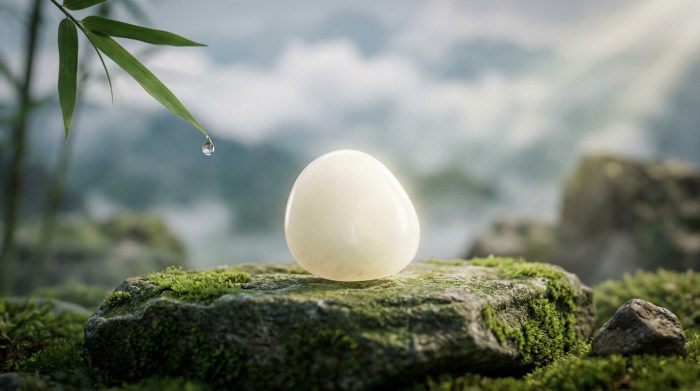
The Chinese have treasured many beautiful stones under the umbrella term 'jade' (玉). It embodies the philosophical ideal of harmony between heaven and humanity. While Hetian nephrite holds the highest place in Chinese jade culture, several other varieties have played important roles in Chinese history and aesthetics.
The Major Types of Chinese Jade
Chinese jade culture encompasses several distinct stone types. Hetian nephrite (和田玉) from Xinjiang's Kunlun Mountains is the pinnacle — prized for its warm luster, extraordinary toughness, and cultural depth. Jadeite (翡翠) entered Chinese culture later, primarily through Myanmar trade in the 18th century; it is prized for its vivid green color and higher hardness. Xiuyan jade (岫岩玉) from Liaoning Province is a serpentine-based stone with a long history in northeastern China — softer than nephrite but produced in large quantities and used extensively in the Hongshan culture (4700-2900 BCE). Dushan jade (独山玉) from Nanyang, Henan Province offers rich, varied colors and has been used since the Neolithic period. Lantian jade (蓝田玉) from Shaanxi Province has an ancient literary history — celebrated in Tang dynasty poetry. Each variety has its own geological origins, physical properties, and cultural associations.
How to Identify and Compare Different Jade Types
The key differences between jade varieties lie in hardness, specific gravity, luster, and texture. Nephrite (Hetian jade): hardness 6-6.5, warm oily luster, very tough fiber structure, feels 'alive' and warm. Jadeite: hardness 6.5-7, glassier luster, vitreous fracture, vivid colors especially green ('imperial jade'). Xiuyan jade (serpentine): hardness 3-5, softer and more susceptible to scratching, often translucent with a greasy luster. Dushan jade: hardness 6-7, varied colors sometimes in a single stone, distinctive mottling. Lantian jade: various minerals, variable properties. In the market, certificates from reputable gemological laboratories (such as NGTC) are essential for proper identification, as imitations and mislabeled stones are common.
Choosing the Right Jade for You
Each type of Chinese jade has its devotees, and choosing the right jade depends on what you value. If you seek the deepest connection to traditional Chinese jade culture — the jade of emperors, philosophers, and Confucian gentlemen — Hetian nephrite is the only choice. Its warmth, toughness, and distinctive luster are unmatched. If you love vivid green color and don't mind a slightly harder, more vitreous stone, fine Myanmar jadeite offers extraordinary beauty. If you're exploring jade culture on a more accessible budget, Xiuyan jade or Dushan jade offer genuine historical and aesthetic interest at lower prices. At Safinite, we specialize exclusively in certified authentic Hetian nephrite jade — the stone at the heart of Chinese jade tradition. Browse our collection or visit our jade culture library to learn more.
Frequently Asked Questions
What is Dushan jade and why is it significant?
Dushan jade (独山玉) comes from Nanyang, Henan Province — one of the 'Four Famous Jade' types of China along with Hetian, Xiuyan, and turquoise. It is notable for its extraordinary color variety: a single piece can contain white, green, yellow, brown, red, and black zones. Archaeological evidence shows Dushan jade use since the Neolithic period, with a major jade workshop site (Huangshan ruins) excavated nearby. Its color variety makes it particularly prized for qiaose (俏色) carving — designs that use natural color zones for decorative effect.
What is turquoise's place in Chinese jade culture?
Hubei turquoise (湖北绿松石) has been used in Chinese culture for thousands of years, though it is technically not jade. Archaeological finds show turquoise use in Erlitou culture (2100-1500 BCE), possibly representing the Xia dynasty. It was often inlaid into bronze vessels and jade artifacts for decorative effect. China is one of the world's major turquoise producers, with the Hubei deposits yielding material of distinct blue-green color prized in both Chinese and international markets.
The world of Chinese jade is richly diverse, with each variety offering its own aesthetic pleasures and cultural history. At Safinite, we focus on the apex of this tradition: certified authentic Hetian nephrite jade. Explore our collection or visit the jade knowledge library to deepen your understanding.