
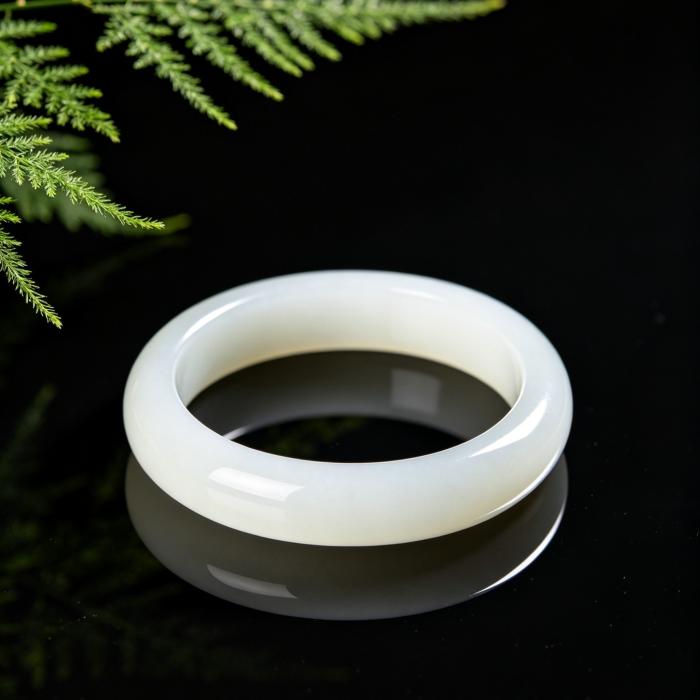
Introduction: The Quiet Power of Jade
For millennia, jade has been revered not merely as a gemstone but as a living symbol of virtue, resilience, and harmony. Among the many varieties, Hetian jade—mined from the Kunlun Mountains in Xinjiang—holds a special place in Eastern culture. Its warm, lard-like texture and soft luster speak to a philosophy of understated elegance. In a world of fleeting trends, choosing a piece of true Hetian jade is an investment in timeless beauty. But how does one navigate the market with confidence? This guide offers insider knowledge to help you select a piece that resonates with authenticity and craftsmanship.
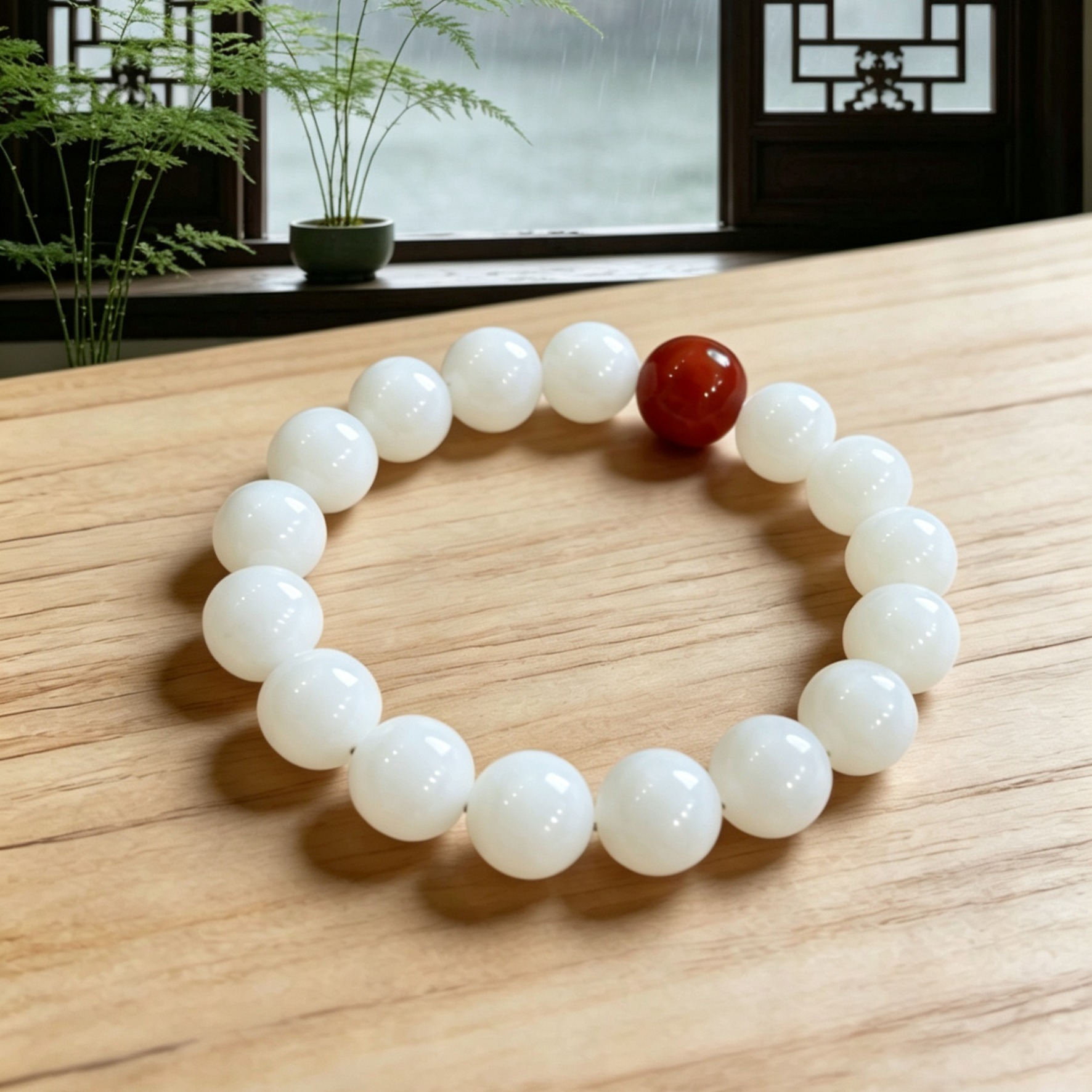
Understanding Hetian Jade: More Than a Stone
Hetian jade, classified as nephrite, is prized for its remarkable toughness and dense, fine-grained structure. Unlike the glassy brilliance of jadeite, Hetian jade whispers with a gentle, oil-like sheen. This quality is often described as wen run—warm and smooth to the touch. The finest grades, such as the coveted "mutton-fat" white jade, feel almost creamy against the skin. This tactile experience is central to the jade’s appeal; it is meant to be worn, touched, and loved over time. As the saying goes, "You nourish the jade, and the jade nourishes you." Over months and years, the piece may develop a subtle patina, a physical testament to your personal journey—a phenomenon confirmed by gemologists as the gradual infusion of natural oils into microscopic surface pores.
Hetian Jade vs. Jadeite: Key Distinctions
A common point of confusion for newcomers is the difference between Hetian jade (nephrite) and jadeite. Both are culturally significant but chemically distinct. Jadeite is a sodium-rich pyroxene, while Hetian jade is a calcium-rich amphibole. Visually, jadeite often exhibits vivid emerald greens and a glassy transparency, while Hetian jade favors softer tones—creamy whites, pale celadon greens, and earthy browns. The luster is also a giveaway: Hetian jade has a characteristic oily gloss, whereas jadeite shows a sharper, vitreous shine. Neither is superior; they belong to different aesthetic traditions. However, if you are drawn to the serene, meditative quality of a stone that seems to glow from within, Hetian jade may be your perfect companion.
How to Spot Authenticity: Five Expert Tips
The market, especially online, can be treacherous. To ensure you acquire genuine Hetian jade, follow these guidelines:
- Insist on a certificate. Request a grading report from a recognized laboratory with CMA or CAL accreditation. Verify the report online at the issuer’s website.
- Beware of flawless perfection. Natural jade has inclusions, tiny fissures, or subtle color variations. An unnaturally uniform piece at a low price is almost certainly a resin imitation or glass.
- Feel the weight and temperature. Genuine Hetian jade feels heavier than it looks and remains cool to the touch initially. Plastic or glass imitations warm up quickly.
- Examine the surface. Use a 10x loupe. Real jade shows a fibrous, interwoven structure under magnification, not bubbles or flow lines.
- Buy from a trusted source. Established dealers with transparent return policies and a reputation for ethical sourcing are your safest bet. For a curated selection of certified pieces, explore Safinite's collection of authentic jade jewelry.
Caring for Your Jade: A Lifetime of Lustre
Proper care ensures your jade retains its beauty across generations. Unlike diamonds, jade is porous and can be damaged by harsh chemicals. Clean your piece with a soft cloth and lukewarm water. Avoid ultrasonic cleaners, detergents, and salt water baths, which can erode the surface. Store jade separately to prevent scratches. When not worn, wrap it in a soft fabric and place it in a jewelry box. Many enthusiasts also believe in periodic "rest" for jade—letting it sit in a cool, dark place to rebalance its energy. Whether you follow this tradition or not, gentle handling is the key to longevity.
Conclusion: Wearing a Legacy
To own a piece of Hetian jade is to carry a fragment of ancient earth and human artistry. It connects you to a lineage of scholars, warriors, and aesthetes who saw in its gentle glow the virtues of patience, courage, and purity. As you choose your piece—whether a smooth bangle, a carved pendant, or a prayer-bead bracelet—remember that the best jade is not the most expensive, but the one that resonates with your spirit. Let it be a daily reminder of your own inner radiance. Explore our handpicked selection at the link above, and begin your journey with a stone that will never cease to reveal new depths of beauty.